|
| Jean Prouvé |
Jean
Prouvé was born in 1901 in Paris, France to his father Victor
Prouvé, an artist who was a founding member of the Art Nouveau
School in Nancy. In Nancy, Jean Prouvé apprenticed under a creative
blacksmith between the years 1916 and 1919. Prouvé continued to
apprentice metal working in Paris until 1921 under another metal
worker, Szabo. Through this experience, Prouvé gained skills in
metal working and eventually opened his own shop in Nancy 1923. He
began by creating metal pieces and moved into metallic furniture
design. In 1930, he helped found the Union des Artistes Modernes
(UAM). In 1931, with the help of A. Schotte, Prouvé was able to
purchase new machinery for metal working (opening Société des
Ateliers Jean Prouvé), mass producing pieces and finishes including
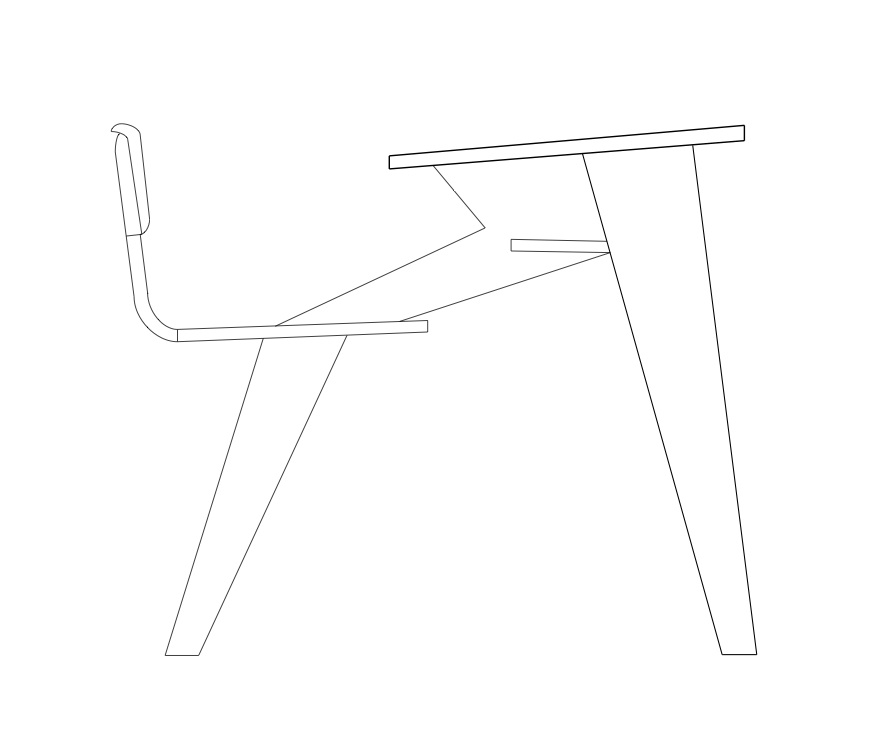
handles and for schools, and a chair and desk combination. He had
the chance to meet Le Corbusier, Jean Jeanneret and Charlotte
Perriand at the Exposition Internationale des Arts Décoratifs et
Industriels Modernes in 1935. His work evolved into mass produced
architecture, where he was commissioned to design huts for the French
Army in 1939 and collapsable units for the homeless. Following the end of World War II, Prouvé was the mayor of Nancy. In 1947, Prouvé
moved his factory to Maxéville. In 1949, he was commissioned to
design prefabicated housing for French colonies of west and central
Africa. After two years, this project was cancelled because it was
not cost effective. During this time, Prouvé was also involved with
Le Corbusier, where he designed floors, staircases and furniture for
a show apartment in Le Corbusier's Unité d'habitation. Prouvé also
worked with Charlotte Perriand during the 1950's. After selling his
practices in the 1950's Prouvé worked for the Compagnie Industrielle
de Matériel de Transport. Prouvé also taught at the Conservatoire National des Arts et Métiers (CNAM).
 |
| Jean Prouvé and Le Corbusier |
Victor Prouvé was a great influence of Jean Prouvé, and despite their difference in styles (Victor - Art Nouveau & Jean - modernist), they both maintained a desire to create originality. Prouvé credited both his father and the Art Nouveau School in Nancy for his focus on bringing something new to the formalized art that existed. Prouvé was not influenced by history as his father was, but looked forward, believing that modernist design was based on what was not there. Neither he nor his father were in design to make money. Le Corbusier also greatly influenced Prouvé. Both men believed in practical housing, this belief arising from the two world wars, which lead to a housing crisis. One difference between the two was where there ideals lay: for Le Corbusier - in the theory, for Prouvé - in the process.
Citations
"Jean Prouvé" accessed November 10, 2012, http://www.jean-prouve-architect.com
"The Architect," accessed November 10, 2012, http://www.lamaisontropicale.com/www/
"On the Subject of Modern Mastery: Jean Prouvé, 1901 - 1984," accessed December 5, http://secretforts.blogspot.ca/2009/11/on-subject-of-modern-mastery-jean.html
O'Day, Kathleen. “Tropical or Colonial? A Reception History of Jean Prouvé's Prefabricated Houses For Africa.” (Thesis, Louisiana State University and Art College, 2009.)
"Fondation Le Corbusier," accessed December 10, 2012, http://www.fondationlecorbusier.fr/corbuweb/morpheus.aspx?sysId=13&IrisObjectId=4523&sysLanguage=fr-fr&itemPos=10&itemCount=13&sysParentId=51